
- Admin
- Study Abroad
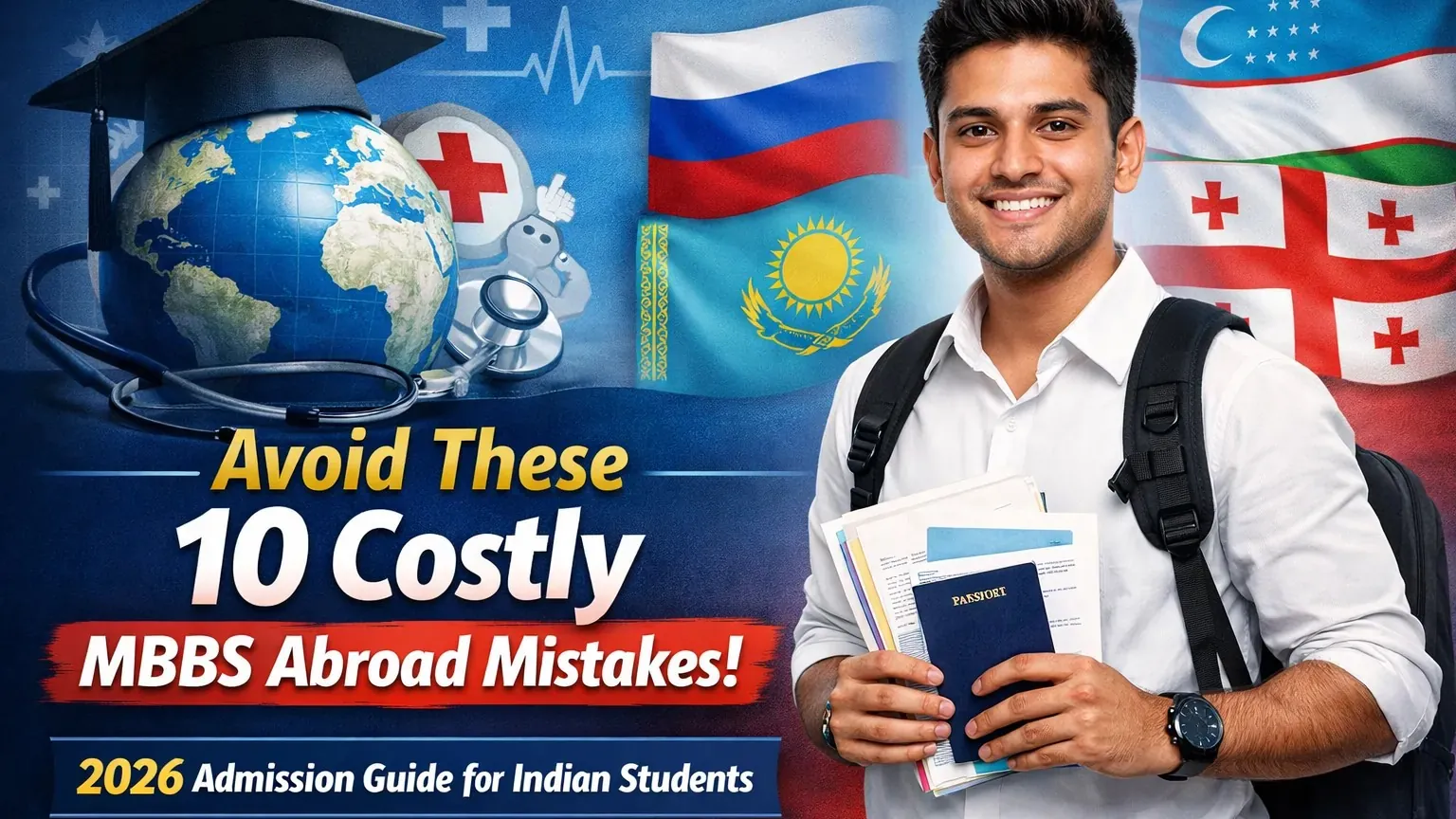
10 Common Mistakes to Avoid While Planning MBBS Abroad
10 Common Mistakes to Avoid While Planning MBBS Abroad
Choosing to pursue MBBS abroad is a life-changing decision. It opens doors to global exposure, advanced medical education, and diverse clinical practices. However, the admission process can be overwhelming, and even a small mistake may cost you your dream medical seat.
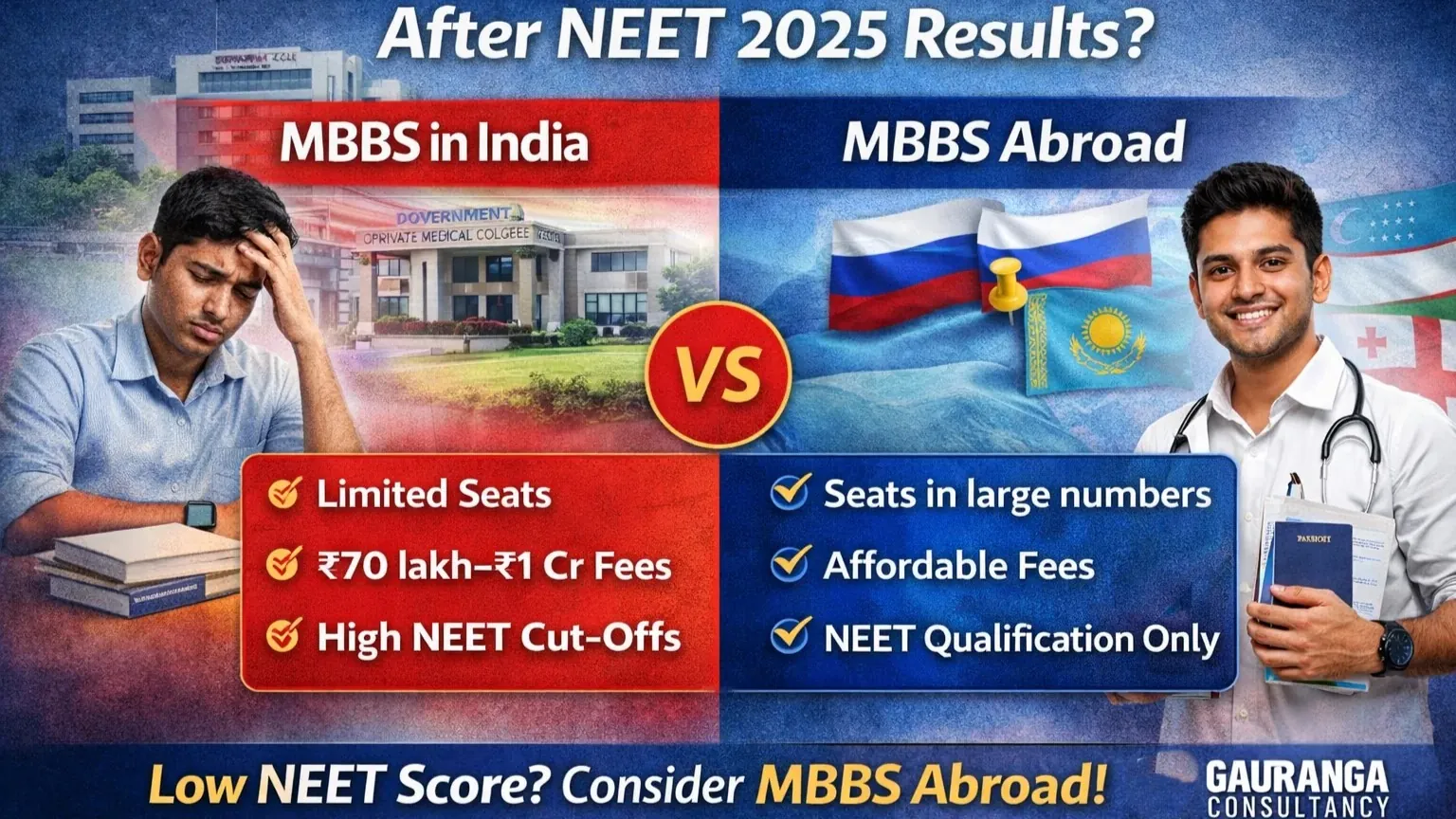
Whether you are planning to study MBBS in Russia, Kazakhstan, Georgia, or Uzbekistan, it is crucial to be aware of common errors students make while applying. With proper study abroad guidance in Delhi NCR, you can easily avoid these pitfalls and make informed decisions.
Below are the 10 most common mistakes students should avoid when planning MBBS overseas.
1. Inadequate Research About the University
Many students select a university based only on suggestions, social media trends, or low fees, without checking essential factors like accreditation, faculty, hospital tie-ups, and academic reputation.
Expert Tip:
Always verify whether the university is approved by NMC, WHO, and listed in the World Directory of Medical Schools. Check official websites, student reviews, and alumni feedback before finalising.
2. Overlooking Country-Specific Eligibility Criteria
Each country has its own admission requirements, such as NEET qualification, age limits, documentation rules, and language requirements. Missing even one criterion can lead to rejection.
Important Note:
Before applying, carefully understand the eligibility rules of the destination country and university — especially NEET requirements for Indian students planning MBBS in Russia for Indian students.
3. Applying Too Late
Top medical universities abroad have limited seats that fill quickly. Many students delay applications and miss deadlines, forcing them to compromise on university quality.
Smart Advice:
Start the admission process at least 6–8 months in advance to allow sufficient time for documentation, visa processing, and financial planning.
4. Ignoring University Accreditation
Enrolling in a non-recognised or blacklisted university can completely derail your medical career. Graduates from such institutions may not be eligible to appear for FMGE/NExT in India.
Safety Check:
Ensure the university is recognised by NMC, WHO, WFME, and other global medical authorities before taking admission.
5. Underestimating Language Challenges
Some countries offer MBBS programs partially or fully in the local language, which can create difficulties in academics and clinical practice.
Helpful Tip:
Choose universities that provide a 100% English-medium MBBS curriculum. Learning basic local language skills can further improve patient interaction during clinical exposure.
6. Selecting Universities Only Based on Low Fees
While affordability is important, extremely low fees may indicate poor infrastructure, limited hospital exposure, or substandard education quality.
Balanced Approach:
Focus on value for money, not just cheap tuition. Compare overall facilities, academic standards, and living conditions — especially when considering MBBS in Russia fees or MBBS in Kazakhstan.
7. Ignoring FMGE / NExT Track Record
If you plan to return to India for practice, clearing FMGE or NExT is mandatory. Many students fail to check the past performance of Indian students from their chosen university.
Pro Tip:
Ask for the university’s FMGE/NExT pass percentage and whether they offer exam-oriented support or coaching.
8. Falling for Fake Agents or Scams
Unregistered agents often promise guaranteed admissions or offer fake universities, leading to financial loss and career damage.
Stay Alert:
Always consult a trusted and certified study abroad consultant in Delhi NCR. Never make full payments without official admission letters and verified documents.
9. Errors in Documentation
Incorrect or incomplete documents — such as passport details, academic transcripts, or application forms — can cause visa delays or application rejection.
Checklist Tip:
Double-check all documents, keep notarised copies, passport-size photographs, NEET scorecard, and translated documents ready before submission.
10. Poor Financial Planning
Many students calculate only tuition fees and ignore additional costs like accommodation, food, insurance, visa renewals, and travel expenses.
Financial Planning Advice:
Prepare a complete budget for the entire MBBS duration (5–6 years), including emergency funds, to avoid stress during studies.
Conclusion:
Pursuing MBBS abroad can be one of the most rewarding decisions of your life — if planned wisely. From selecting the right university and country to ensuring proper accreditation, finances, and exam preparedness, every step matters.
With the right guidance, your journey to becoming a globally qualified doctor can be smooth and successful.
At Gauranga Consultancy, we are recognised as the best overseas education consultant in Delhi, offering end-to-end support — from university shortlisting and admission to visa processing and travel assistance.
If you are looking for reliable study abroad guidance in Delhi NCR, connect with our experienced counsellors today for a free consultation and start your MBBS journey with confidence.

 16 Mar,
2026
16 Mar,
2026 
.webp)
